01
Copper wire
THHN, THWN, THWN-2, XHHW, XHHW-2, RHW-2, bare copper, fixture wire
Review this material →NEW YORK STATE · SURPLUS WIRE & CABLE
Have surplus copper or aluminum wire to sell? We review unused, overstock, leftover and industrial electrical cable, including full reels, partial reels, coils and bulk inventory throughout New York State.
INVENTORY SUBMISSION · RESPONSE BY EMAIL OR PHONE
Send the material, the location and whatever photographs you have. Reel tags and jacket prints decide most of the review; the rest is logistics.
WHAT WE REVIEW
Surplus wire accumulates in predictable shapes: a sealed reel nobody needs, a partial reel nobody counted, a coil at the back of a crib, a pallet of cut lengths after a service change. All of it is reviewable.
We do not buy transformers, switchgear, breakers, MCCs, generators, bus plugs, chillers or scrap machinery. That narrow scope is deliberate: it is what makes the review specific instead of a general salvage enquiry.
CATEGORIES
Nine of the most common categories are below; the full index covers seventeen. Each page explains what is reviewed, what the jacket should read, and which photographs move a review forward.
THHN, THWN, THWN-2, XHHW, XHHW-2, RHW-2, bare copper, fixture wire
Review this material →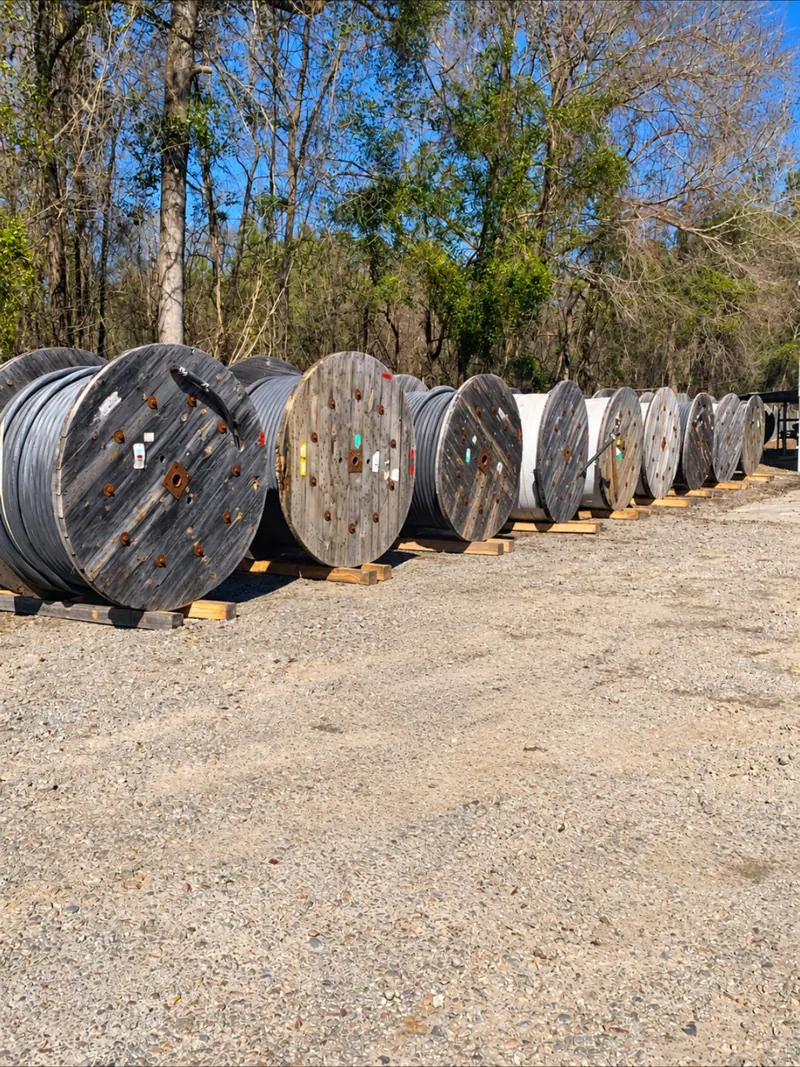
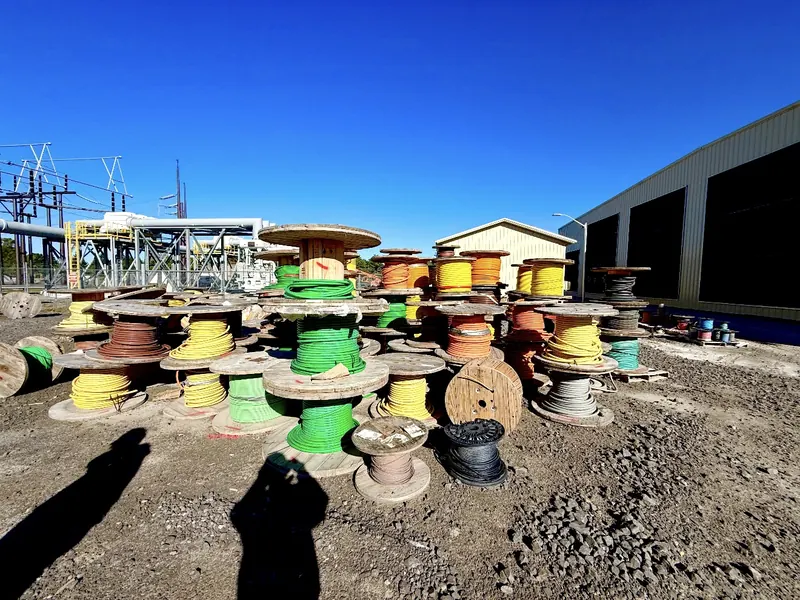
URD, USE, USE-2, RHW-2/USE-2 dual rated, triplex and quadruplex
Review this material →01 · COPPER
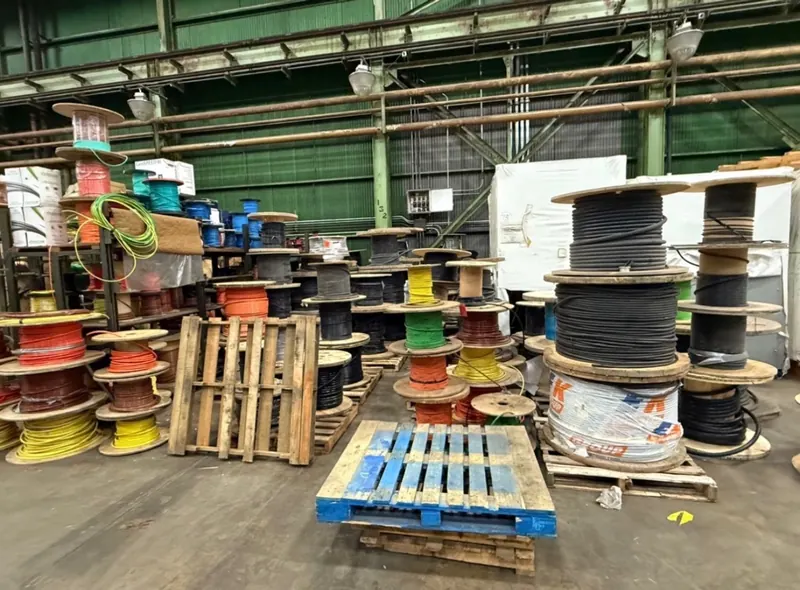
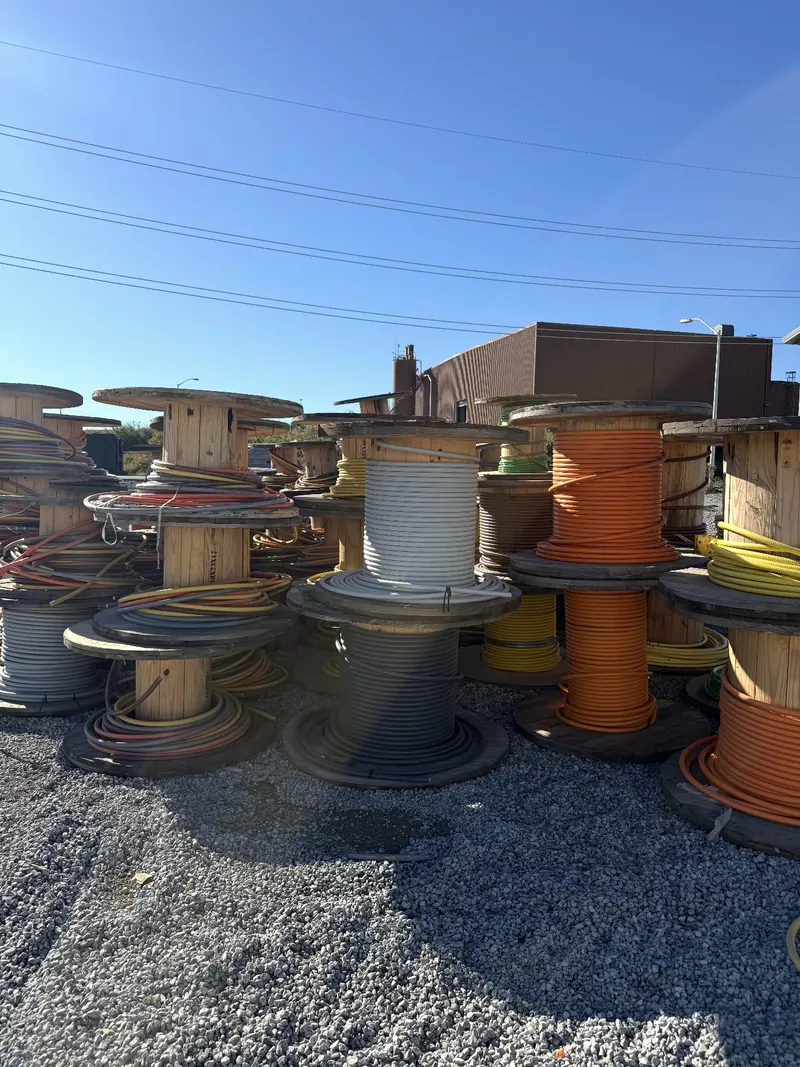
Copper is the material that decides whether a surplus lot is worth quoting at all. THHN, THWN-2, XHHW-2, bare grounding conductor, solid and stranded, insulation colours from black through the full phase set — all of it is reviewed, and all of it is reviewed on documented footage rather than on a guess.
A sealed reel and an opened reel of the same size are not the same material. Send the tag if it survives; if it does not, measure the pack and count wraps so the estimate has a method behind it.
02 · ALUMINUM
Aluminum does the heavy work in New York: SER and SEU service entrances, XHHW-2 feeders, USE-2 and URD underground, and large conductor in 250 through 1000 MCM. It is lighter than copper for the same ampacity, which changes the logistics as much as the review.
Modern AA-8000 alloy is not the old EC-grade branch wire that gave aluminum a poor name. The alloy, insulation type and conductor count on the tag are what a review reads first.
03 · LARGE CONDUCTOR
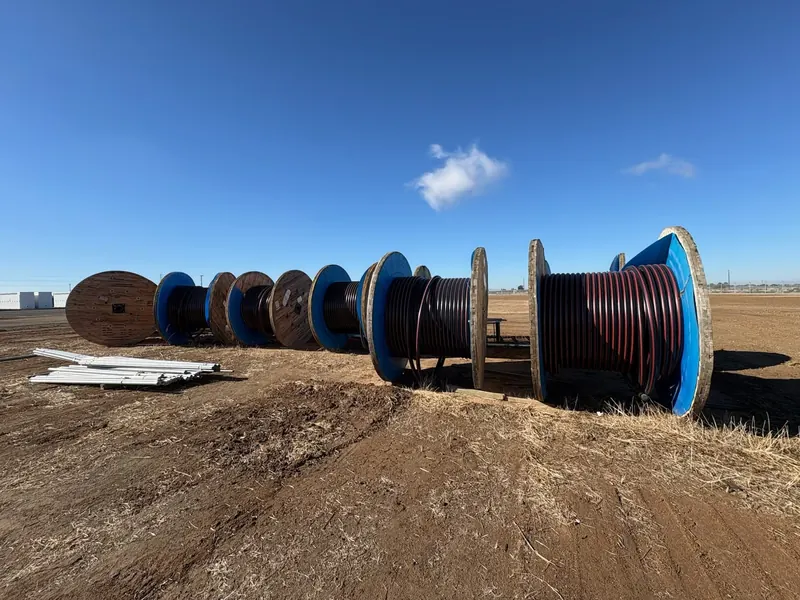
Large conductor is where a surplus inventory holds real value and where a wrong assumption is expensive. 250, 300, 350, 400, 500, 600, 750 and 1000 MCM in copper and aluminum, XHHW-2, THHN, RHW-2 and bare, on reels that still carry their tags.
Strand class matters for terminations and is printed on the tag. Insulation type determines the application and is printed on the jacket. With both, the review is straightforward; without either, it becomes conservative.
04 · MEDIUM & HIGH VOLTAGE
From 5 kV to 35 kV and above: EPR and XLPE insulation, 100% and 133% insulation levels, copper tape and wire shields, lead and corrugated aluminium sheaths at transmission class. This is the material where documentation decides everything.
A reel tag, a manufacturer designation and a test record are what make high voltage cable placeable. Without them the review is limited to recovery, and we will say so rather than imply otherwise.
05 · REELS & OVERSTOCK
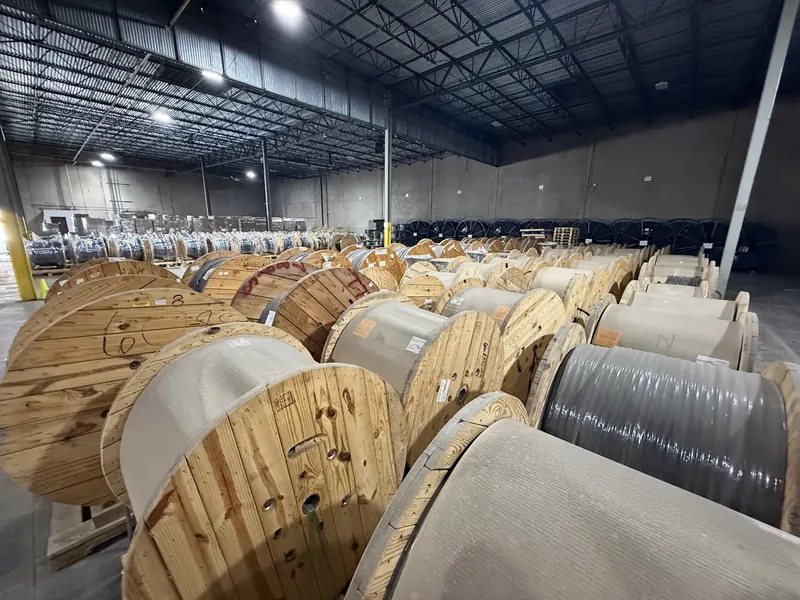
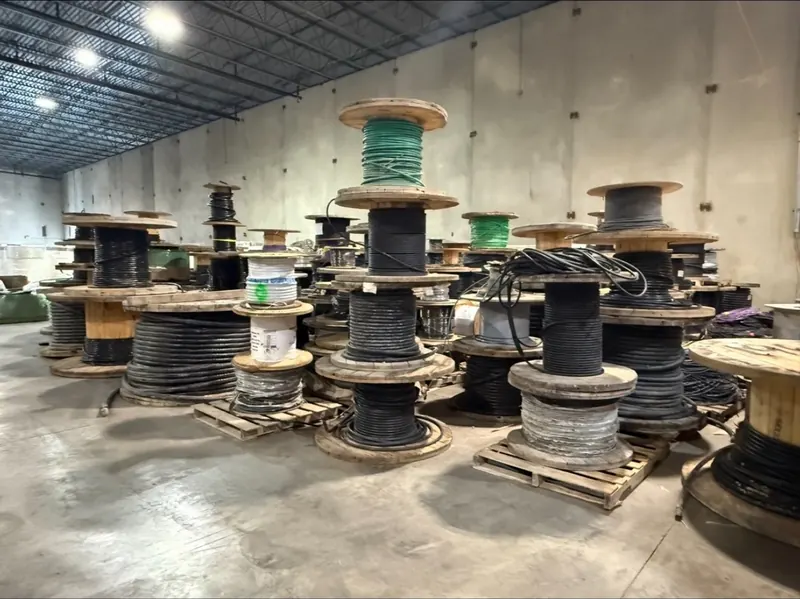
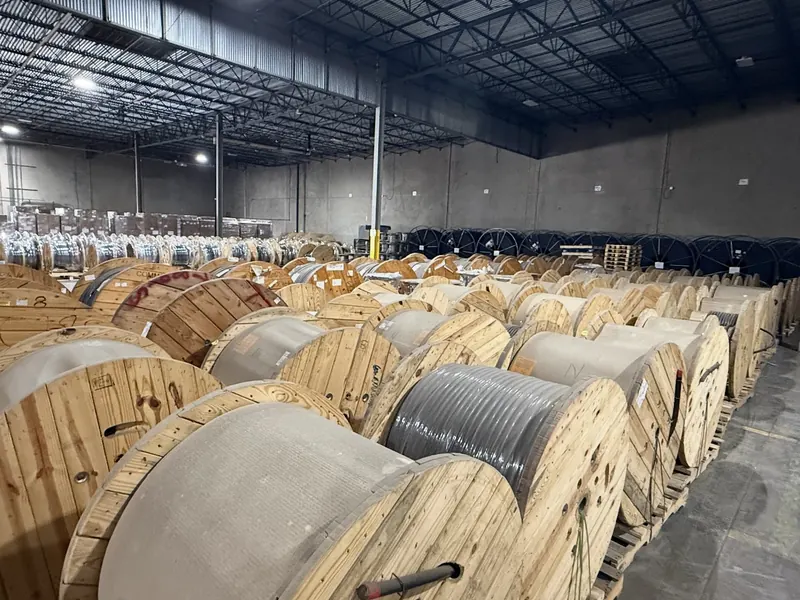
Most lots are neither clean nor complete. A row of reels with half of them opened, some tagged and some not, is the normal shape of surplus — and it is reviewable in one pass.
A partial reel is reviewed on the same facts as a full one: type, size, metal, voltage and footage. The difference is evidence. Where a tag reads 1000 ft and 300 ft remain, that is a documented partial. Where there is no tag at all, the wire pack diameter and wrap count provide an estimate with a stated method.
Distributor overstock is a different problem again: clean, tagged, well stored and commercially idle. Those reviews start with an inventory extract and a sample of tags, and they are structured around clearing space rather than breaking lots apart.
SELLERS
Nine industry pages describe how surplus accumulates in each kind of operation, what documentation helps, and what logistics usually look like.
A contractor’s surplus is a by-product of winning work: material ordered for a job that was value-engineered, a service size that changed after the gear was released, reels left over from a fit-out that finished early..
Read the page →A plant’s wire inventory is a maintenance asset that quietly becomes a storage liability.
Read the page →A data centre build is a wire-intensive project delivered in phases, and phases change.
Read the page →Utility surplus is the most documented category of wire in the state — and the most tightly controlled.
Read the page →Large institutions run continuous construction and maintenance programmes, which means they accumulate wire the way they accumulate furniture: in storage rooms, by project, with a fixed-asset process attached..
Read the page →PROCESS
Three steps, no obligation until terms are agreed in writing. Nothing leaves your site on a verbal number, and no offer is made before someone has read the jacket legend or the reel tag.
Name, company, location, wire type, size, approximate footage and photographs of the reels, tags and jacket print. Partial information is workable.
We say what is reviewable, what is not, what stays unidentified, and whether freight makes sense for the lot as described.
Price, payment timing, freight, loading and pickup are named in writing for that transaction. If the lot is not accepted, you are told why.
SELLER EDUCATION · PHOTOGRAPHS
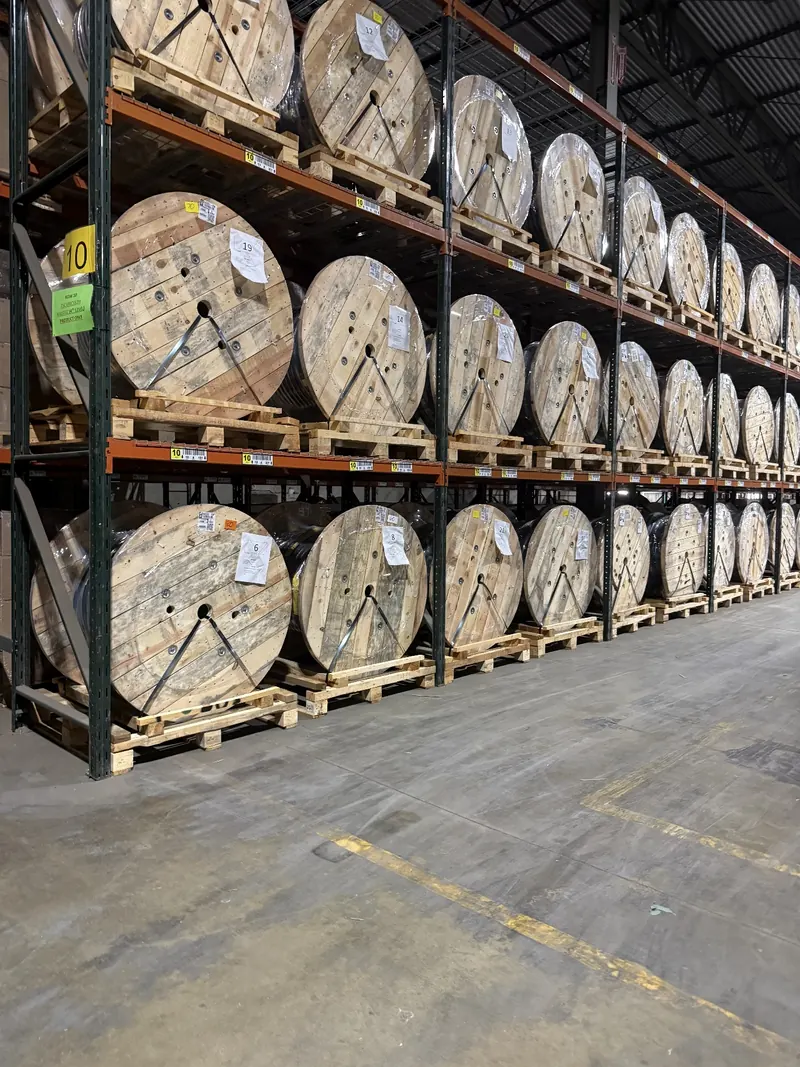
A photograph of forty reels tells a buyer that there are forty reels. A photograph of one reel tag tells a buyer what the material is, what it is worth reviewing against, and whether the rest of the reel matches. Four images do most of the work:
If there is no tag, say so and photograph the jacket instead. An unknown reel that is described as unknown is more useful than a guess, and it can still be reviewed as mixed material.
NEW YORK
Downstate lots are small and access-driven. Upstate lots are heavier and better documented. The process is identical; the logistics are not.
REFERENCE
Answers describe how material is reviewed. They are not an offer, a price or a commitment to purchase.
Surplus, unused, overstock, leftover and legally released wire and cable: copper and aluminium building wire, THHN, XHHW, MC and AC, tray cable, VFD cable, service entrance cable, URD and USE-2, bare copper, control and instrumentation cable, welding cable and SOOW, medium and high voltage cable, and large MCM conductor. Wire and cable only — not transformers, switchgear, breakers or machinery.
Partial reels are reviewed regularly. Footage is the value driver, so send the tag if it exists, or measure the wire pack and count wraps so the estimate has a stated method. A partial reel of a common small gauge rarely justifies freight alone, but it often travels with a larger lot.
From the material in front of us: type, conductor metal, size, voltage, conductor count, documented footage, condition and how the material is packaged. There is no statewide price list and no per-pound conversion applied to reels. Any price is put in writing for that specific lot.
It is agreed per transaction. Depending on the lot size, location and access, freight is either arranged by us or by the seller, and the written terms name which. Nothing is loaded before that is settled.
Yes. Photograph the jacket print and the reel tag, or say plainly that neither exists. Unidentified material is reviewed as unidentified, and that is a legitimate starting point rather than a disqualification.
No. This desk buys surplus and released material, not installed systems, and it is not a scrap yard. Anything removed must have been legally released by the owner of the installation, which the quote form asks you to confirm.
INVENTORY SUBMISSION · RESPONSE BY EMAIL OR PHONE
Second form, same desk. If you have already submitted a lot, use the phone or email above rather than duplicating it.
Photographs are faster than descriptions. If you have a reel tag, send it — the legend usually answers the first four questions.
STATEWIDE · NEW YORK
Photographs and a short description are enough to start. If the material is a fit, the numbers are written down before anything is loaded.