PROCESS · DOCUMENTATION · LOGISTICS
How selling surplus wire works here
Four stages: identify, submit, review, and — only if accepted — written terms and freight. Nothing is implied before the third stage is complete.
STAGE 01
Identify what you have
Identification is the work that makes a review possible. Six facts decide almost every lot: conductor metal, size, insulation type, voltage rating, conductor count and footage.
Read the reel tag
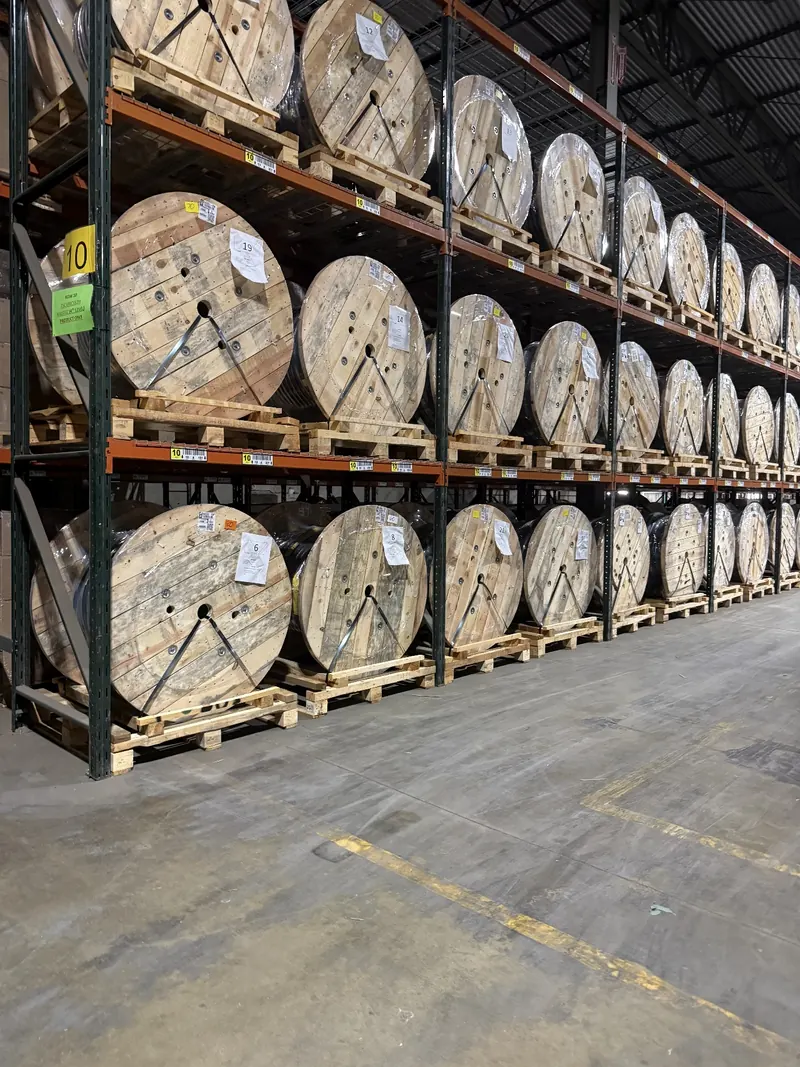
The tag on a wooden reel flange usually carries the manufacturer, part number, conductor size, footage and date of manufacture. It is the single most valuable piece of evidence in a surplus lot, because it resolves size and footage at once.
Read the jacket legend
Cable jackets are printed with the type, temperature rating, voltage class and often the approvals. A legend might read 12 AWG THHN/THWN-2 600V or 3/C 2 AWG XHHW-2 600V. Photograph it in one continuous line rather than in overlapping sections.
Check the metal at a cut end
Copper reads red-brown; aluminium reads silver. On large conductor, the strand pattern also tells you whether it is compact, compressed or concentric — which matters for terminations.
Estimate footage honestly
Measure the outside diameter of the wire pack, count the visible wraps across the traverse, and note the method you used. A stated estimate is more useful than a confident number with no basis.
| Conductor metal | Copper, aluminium, copper-clad |
|---|---|
| Size | AWG or MCM / kcmil |
| Insulation | THHN, THWN-2, XHHW-2, EPR, XLPE |
| Voltage | 600 V, 1 kV, 5–35 kV, above 35 kV |
| Conductor count | Single or multi-conductor |
| Footage | Tag reading or measured estimate |
| Reel condition | Intact, weathered, damaged flange |
| Packaging | Reel, spool, coil, carton, loose |
STAGE 02
Submit photographs and details
The quote form asks for the seller, the location in New York, the material, the condition and the loading arrangements. Photographs can be attached directly, up to five at a time.
If you have more images than the form accepts, send the form first and email the remainder. Reference the lot in the subject line. Nothing about the process requires a spreadsheet, an inventory system or a site visit before a first review.
What to write in the description
- What the jacket legend reads, verbatim if you can
- Which pieces are sealed and which are opened
- How long the material has been stored, and where
- Anything damaged, wet, respooled or unidentified
STAGE 03
Receive an inventory review
The review separates what is documented from what is estimated, and says which parts of a lot are not reviewable. It is a written answer, not a phone call that leaves no record.
What the review covers
- Which material is identified, and on what evidence
- Which material is estimated, and by what method
- Which material is unidentified or damaged
- Whether freight makes sense for the lot as described
- What additional evidence would change the outcome
What it does not cover
- A guaranteed price before inspection or documentation
- A pickup date before terms are agreed
- Acceptance of material that is installed or not released
- Any valuation of equipment, gear or machinery
STAGE 04
Agree written purchase and logistics terms
If a lot is accepted, the terms are written down before anything moves: what is being bought, on what basis, at what price, paid when, loaded how, and collected by whom.
Named in the terms
- Material description and quantity basis
- Price and payment timing
- Who arranges freight and who pays
- Who loads, and with what equipment
- Pickup window and site access requirements
Then, and only then
- Material is staged and counted against the terms
- Loading is scheduled with the site
- Any discrepancy is recorded before the truck leaves
- Payment follows the agreed timing
SELLER EDUCATION · PHOTOGRAPHS
Photograph the reel tag, not the pile
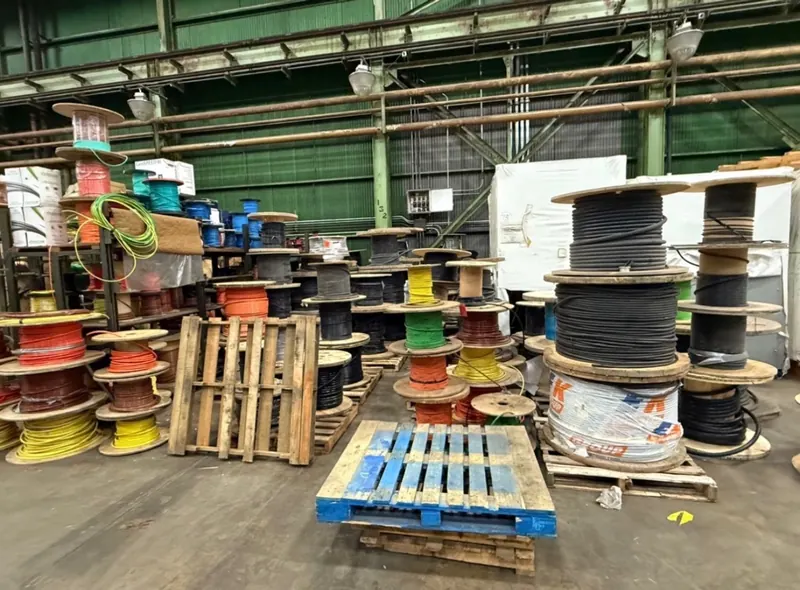
A photograph of forty reels tells a buyer that there are forty reels. A photograph of one reel tag tells a buyer what the material is, what it is worth reviewing against, and whether the rest of the reel matches. Four images do most of the work:
- One wide shot of the whole row, pallet or cage, so the quantity can be judged.
- The reel tag, square-on and readable: manufacturer, part number, size, footage, date.
- The jacket legend, photographed in one continuous line so the type, voltage and approvals are unbroken.
- The end or the pack, showing conductor metal and strand, plus any damage worth declaring.
If there is no tag, say so and photograph the jacket instead. An unknown reel that is described as unknown is more useful than a guess, and it can still be reviewed as mixed material.
REFERENCE
Process questions
Answers describe how material is reviewed. They are not an offer, a price or a commitment to purchase.
Do you need to visit before quoting?
Not always. Many lots are reviewed from photographs and tags. Large or mixed lots usually justify an inspection, and that is proposed rather than assumed.
How long does a review take?
It depends on what arrives. A clean lot with legible tags is quick; a mixed pile with no tags needs questions, and each round takes time. No response time is promised, because a false promise is worse than none.
What if only part of my lot is accepted?
That is common. A review frequently covers the documented portion and leaves the unidentified remainder out. The written terms name exactly what is included.
Can I sell material that a tenant left behind?
Only if you hold title to it or are authorised by the party that does. Storage does not confer ownership, and the quote form asks for that confirmation.
STATEWIDE · NEW YORK
Ready to send the first reel tag?
One legible tag, one wide photograph and the ZIP code are enough to begin a review.