WAREHOUSES · STORED REELS · EXCESS STOCK · CONSOLIDATION
Surplus Wire Buyers for New York Warehouses and Logistics Facilities
A warehouse holding reels is holding floor space that earns nothing. Whether the material came from a tenant, a former operation or a project, the decision is usually about cubic feet rather than copper.
CONTEXT
How surplus accumulates here
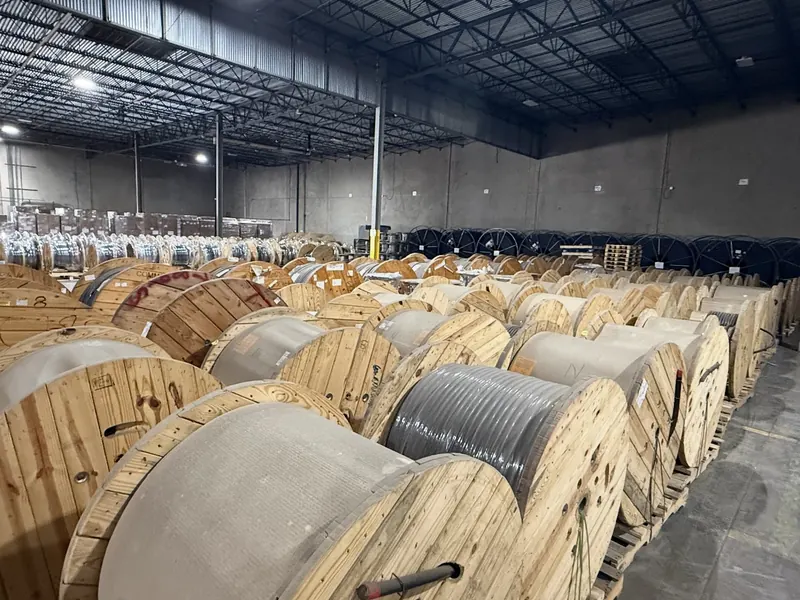
Warehouse and logistics surplus takes two forms: reels stored by a third party, and excess stock owned by the operator. The first requires the owner’s authorisation before anything can be reviewed, and that is usually the slowest part of the process. The second is a straightforward inventory question — what is here, what is documented, and what is worth clearing.
Because the material has often been handled by forklift and stored in whatever bay was free, condition varies. Reels that sat against a wall for years may have flange rot; reels in a climate-controlled bay may be pristine. Both are reviewable, but they are not the same lot, and a walkthrough list with bay references is what makes a large review possible.
Warehouse surplus we review
- Reels stored on behalf of a contractor, distributor or manufacturer
- Excess stock left after a tenant vacated
- Slow-moving inventory occupying prime racking
- Damaged or partially consumed reels moved to a holding bay
- Consolidation surplus from a network reconfiguration
What helps the review
- Authorisation from the party that owns the material
- Bay references and a rough count per bay
- Photographs per bay, plus any legible tags
- Equipment available on site — forklift, dock height, yard access
Terms are agreed per transaction: price, payment timing, who arranges freight, who loads, and who accepts delivery. Nothing in this page is a standing offer or a guarantee of pickup.
INVENTORY SUBMISSION · RESPONSE BY EMAIL OR PHONE
Submit warehouses surplus
For multi-site or multi-bay lots, a walkthrough list plus a sample of tags is the fastest way to start.
REFERENCE
Questions from this industry
Answers describe how material is reviewed. They are not an offer, a price or a commitment to purchase.
Can you review material stored for a third party?
Only with that party’s written authorisation. Storage does not confer title, and the review cannot proceed until the owner is identified and confirms release.
What if reels are damaged by storage?
Flange rot, water damage and crushed outer wraps are described as they are found. Damaged reels are still reviewed where the conductor is intact, but the outcome reflects the damage.
Do you arrange removal from racking?
Removal is planned with the facility and named in the written terms, including who de-racks, who loads and what equipment is required. Nothing is assumed about labour on site.