COPPER · THHN / XHHW / BARE · 600V · STRANDED & SOLID
Copper Electrical Wire Buyers in New York
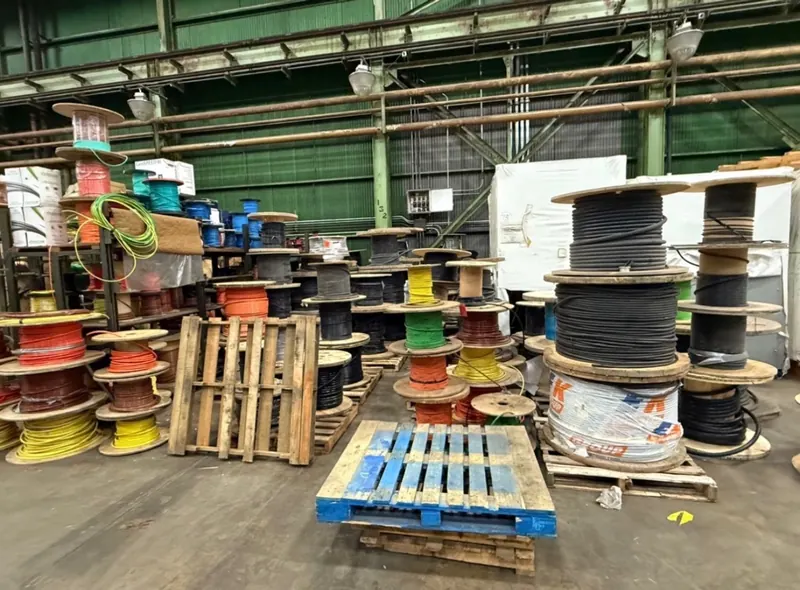
Copper is the part of a surplus wire inventory that most often decides whether a lot is worth quoting at all. We review copper building wire in every common format — full factory reels, opened reels with footage left, coils, boxed wire, cut lengths and bare grounding conductor.
WHAT WE REVIEW
Copper wire: what we review
The useful distinction is not "copper" but which copper. A sealed reel of 500 MCM XHHW-2 and a half-used reel of 12 AWG THHN are both copper and behave nothing alike in a quote: one is a feeder conductor whose value is driven by strand count and insulation, the other is a small-gauge building wire whose value is largely scrap-adjacent unless it is still on the original reel with a readable tag. Send the tag and the jacket legend and the review starts from facts rather than guesses.
We review copper in solid and stranded construction, in insulation colours from black through the full phase-coding set, and in the forms that accumulate at the end of a job: partial reels from a cancelled project, over-ordered service conductor, cut-offs from a panel change, and grounding wire left over after a utility tie-in. Material that has been stored outdoors, crushed by equipment or stripped of its jacket is described differently — say so up front and the review stays honest.
Formats accepted for review
- Sealed factory reels with legible tags and original banding
- Opened reels with most of the original footage remaining
- Coils and boxed lengths in original packaging
- Cut lengths and job overages sorted by size
- Bare copper grounding conductor on spools or in coils
What to send
- The reel tag: manufacturer, part number, size, footage, date
- The jacket print, which usually repeats the type and voltage rating
- Conductor metal — copper reads red-brown at a cut end, aluminum reads silver
- Whether the reel has been stored indoors, and whether flange damage is present
No offer is made until someone has read the jacket legend or the reel tag. If neither survives, the material is still reviewable — it is simply reviewed as unidentified, and the outcome reflects that.
INVENTORY SUBMISSION · RESPONSE BY EMAIL OR PHONE
Send copper wire for review
Photographs of the reel tag and jacket legend are the fastest route to a review. Approximate footage is acceptable; a stated method is better than a confident guess.
REFERENCE
Copper wire — questions sellers ask
Answers describe how material is reviewed. They are not an offer, a price or a commitment to purchase.
Do you buy copper wire that has already been pulled through conduit?
Pulled and recovered conductor is reviewed case by case. It is a different material from new surplus: length is rarely documented, insulation may be scuffed, and the jacket print is often gone. Describe how it was removed and whether it was legally released by the owner of the installation, and include photographs of the ends and any markings.
Is a partial reel of copper wire worth submitting?
Often yes, if the size is useful and the remaining footage can be estimated. Measure the outside diameter of the wire pack, count the visible wraps and note the traverse width; that is usually enough for a first review. A short partial of a very common small gauge may not justify freight on its own, but it can travel with a larger lot.
What about mixed copper sizes on one pallet?
Mixed pallets are reviewed as mixed. Sort by size where you can, photograph each group separately, and note which reels still carry tags. A sorted pallet is faster to quote than a photograph of a pile.
WHO SELLS THIS MATERIAL
Where this material usually comes from
Most lots arrive from one of four places: a contractor closing out a job, a plant replacing equipment, a distributor clearing slow stock, or a demolition project releasing cable legitimately. Each is reviewed on the same facts.
STATEWIDE · NEW YORK
Have copper wire to sell?
Send the tag, the jacket print and an approximate count. If the material is a fit, price and logistics are agreed in writing before anything is loaded.